Choose a bamboo nightgown by its measured shoulder-to-hem length and where that length falls on you. Short, knee-length, midi, and long labels are only approximate categories. Account for side slits, front-versus-back hems, and how the gown moves when seated. Then select sleeves separately: more leg coverage does not require more arm coverage, or the reverse.
A nightgown’s label may say short, midi or long without telling you where its hem will land. Measure from the stated shoulder point, then consider what happens when you sit. Side slits and a higher front hem can change coverage even when the overall length sounds right.
As an Amazon Associate I earn from qualifying purchases. Purchases take place on Amazon.
Three options to explore
A long or short description is less useful than a shoulder-to-hem measurement. Compare that measurement with a gown you own, and check sleeve length separately. How we choose products.

Ekouaer long short-sleeve nightgown
Ekouaer describes this gown as long with short sleeves; confirm where the hem will reach on you.
Check AmazonView design & fit details
Joyaria short nightshirt
Joyaria's short nightgown is the shorter-format option, with the actual length still to check.
Check AmazonView design & fit details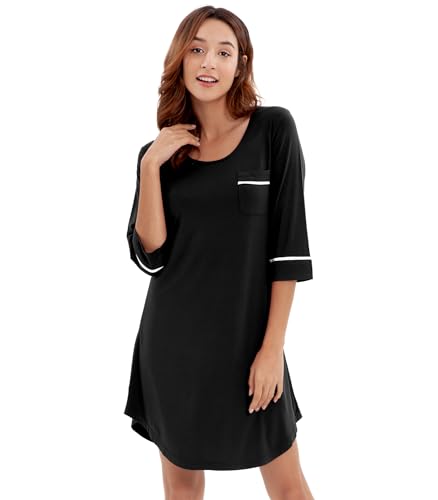
WiWi three-quarter-sleeve nightgown
WiWi specifies three-quarter sleeves, but its title does not give the gown's overall length.
Check AmazonView design & fit detailsAs an Amazon Associate I earn from qualifying purchases. Purchases take place on Amazon.
Choose a destination for the hem
Before comparing listings, decide which area you want covered while standing and while sitting. A hem above the knee creates a different experience from one around the calf. You may prefer less fabric around the legs in bed, or more coverage when walking around the house. Neither preference is dictated by the bamboo-source material. It is a decision about the garment’s format.
Use a nightgown or loose dress with a length you already understand as a reference. Measure from the shoulder point used by the candidate listing to the bottom edge, without stretching the fabric. If the listing does not explain its measurement point, ask for clarification. A front-neckline-to-hem value cannot be compared directly with a shoulder-to-hem measurement because neckline depth changes the starting point.
If you have no reference gown, a tape measure held from an appropriate shoulder point can help identify the approximate length you seek. Let it follow the body naturally rather than pulling it straight through the space where the gown must drape. This is a planning aid, not a guarantee of final hem position. The actual garment’s shape still needs evaluation when tried on.
Account for the front, back, and side independently
Some nightgowns have a straight hem; others use a curved or high-low shape. If the back is longer, the front may offer less coverage than the overall impression suggests. Compare the part of the gown that matters for your intended use. A long back panel does not answer whether the front covers your knees while seated.
Side slits create another distinction. A gown can extend well down the legs while opening higher at the sides. That may make movement easier or suit the style you want, but it changes the coverage boundary. Ask where the slit begins, not simply how long the entire garment is. An ankle-reaching hem with a high opening provides a different experience from an uninterrupted calf-length shape.
The amount of fabric around the hips matters alongside the edge length. A narrow gown may rise when seated because the fabric is drawn over the body, while a roomier shape may drape differently. More length cannot fully compensate for insufficient width. If the hem moves farther than you want during ordinary movement, examine both the length and the hip sweep rather than assuming one number tells the whole story.
Think about the activities surrounding sleep
If you dislike fabric gathering around your knees when you curl up, compare the gown’s width and length together. A fuller skirt may allow a different movement pattern from a narrow long shape. There is no need to claim one works better for every sleeper. The useful question is whether the garment requires repeated adjustment in the positions you commonly use.
Indoor footwear can affect where a long hem sits near the floor. Check the gown barefoot and with the slippers you actually wear, if both are part of your routine. You may want a visible clearance rather than a floor-skimming effect. Choosing that practical endpoint is different from assuming the longest gown provides the best coverage in every situation.
Understand how body proportions influence the endpoint
A fuller bust or longer torso can change where the front hem falls. Height alone is an incomplete shortcut: compare shoulder-to-hem length, then check the gown on your body. If the front rides up despite sufficient overall length, consult the front-room and coverage checks.
Sizing up may add circumference and sometimes changes in length, but you should not assume a fixed increase without the garment chart. If the gown is comfortable in width and simply too short, look for a longer version or another format. A much larger gown can introduce loose armholes or an unwanted neckline opening while still failing to provide the precise hem you intended.
Shortening a plain hem may be possible when the shoulders and body already fit. Slits, curved edges and decorative trim can complicate the work; ask a tailor before buying for alteration. For sleeve coverage, use the separate sleeve-length guide.
Long sleeves and a long gown are different measurements
Joyaria lists a short bamboo-viscose nightgown, while WiWi lists long-sleeve nightshirts. Those labels describe different parts of the garment: WiWi’s sleeve length does not establish a calf- or ankle-length hem. Compare shoulder-to-hem measurements for your selected size before choosing the longer-looking photograph.
For arm coverage, a sleeveless gown still needs an armhole that moves comfortably and gives the side coverage you want. Short sleeves cover the upper arm; three-quarter sleeves leave the wrists clear; long sleeves add forearm coverage. WiWi lists a three-quarter-sleeve bamboo-viscose nightgown as an intermediate option. Check the sleeve opening as well as the endpoint, particularly if you wear a robe over it.
Questions about this choice
Does long sleeve mean a bamboo nightgown reaches below the knee?
No. Sleeve length and gown length are separate specifications. A long-sleeve sleep shirt may have a short hem, and a sleeveless gown may be long. Look for the shoulder-to-hem measurement and the sleeve description independently.
How should I compare two nightgowns with different hem shapes?
Compare the shortest front or side section that matters to your coverage, as well as the back length. Include the starting height of any slits. An overall longest-point measurement can conceal a shorter front edge or a higher side opening.
Can the same nightgown be knee-length on one person and mid-thigh on another?
Yes. Height, torso proportions, bust, and how the garment fits affect where the hem falls. The label describes a broad style category; actual garment measurements and a reference piece provide a better prediction for your own body.
Final Verdict
Measure to your preferred hem, then check seated coverage and side openings. The shortest edge or highest slit may matter more than the longest panel.
As an Amazon Associate I earn from qualifying purchases. Purchases take place on Amazon.