Choose sleeve length by where you want fabric on your arms, then check the opening and shoulder fit. Sleeveless tops remove sleeve material but still have armhole edges; long sleeves add coverage but can gather at wrists. Short and three-quarter sleeves offer intermediate coverage. None of these labels establishes fabric weight or a guaranteed cooling result.
A sleeve reaching into the sink is a length problem. An opening pressing into the upper arm is a width problem. Name the contact point before buying another top: shortening a sleeve will not necessarily free the area that pulls.
As an Amazon Associate I earn from qualifying purchases. Purchases take place on Amazon.
Three options to explore
Decide where you want a sleeve to end, then check room at the shoulder and opening. The options below compare coverage, not tested cooling performance. How we choose products.
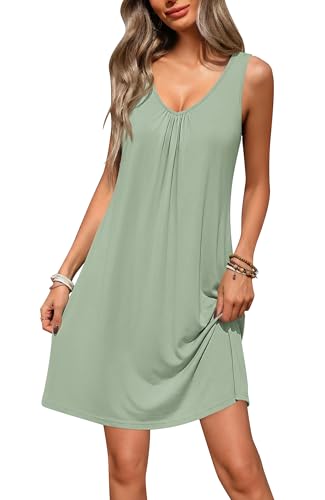
Ekouaer sleeveless nightgowns
Ekouaer's sleeveless nightgown removes sleeves altogether if you prefer uncovered arms.
Check AmazonView design & fit details
WiWi three-quarter-sleeve sets
WiWi's three-quarter-sleeve top comes with pants and pockets in the selected set.
Check AmazonView design & fit details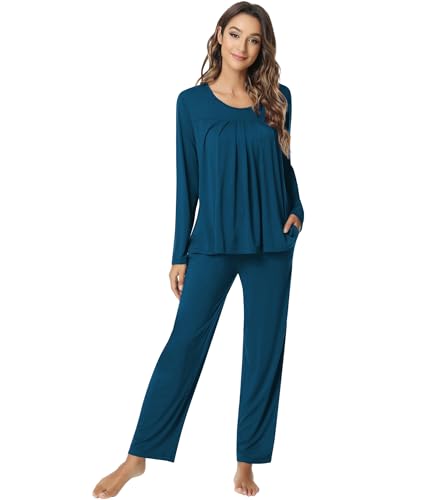
NACHILA women’s long-sleeve pajama sets
NACHILA's long-sleeve pajamas are an option when you want fabric farther down the arms.
Check AmazonView design & fit detailsAs an Amazon Associate I earn from qualifying purchases. Purchases take place on Amazon.
Find the point where your current sleeve bothers you
Begin with the top you already use most. Notice whether you push up its sleeves, pull the shoulder seam into place, tug the upper-arm opening or adjust the armhole after reaching. Each action points toward a different dimension. Pushing up a long sleeve may suggest excess length, but it may also mean you prefer exposed forearms during your evening routine.
If the hem of a short sleeve feels noticeable across the upper arm, a wider opening could matter more than removing several inches of length. If a sleeveless armhole catches at the front when you reach, making the top looser at the waist may not fix it. The relevant fit area is close to the shoulder and underarm, not the overall amount of fabric.
Measure a sleeve you like only after identifying why you like it. Useful notes include where the shoulder seam sits, where the sleeve ends and how wide the opening is when laid flat. Measurements are most helpful when the new listing uses the same method. A stated sleeve length measured from the center back cannot be compared directly with one measured from the shoulder seam.
Four coverage options, from shoulder to wrist
Sleeveless is a cut, not an absence of fit questions
A sleeveless top leaves the arm uncovered but still has an opening surrounding the shoulder joint. A higher armhole can provide more side coverage while creating a closer edge near the underarm. A deeper opening may feel less enclosed but reveal more from the side when reaching or leaning. Check both front and side views instead of judging from the neckline alone.
Strap width and back shape also matter. A racerback connects fabric differently across the upper back from a conventional tank, and a narrow camisole strap provides a different contact area from a broad shoulder panel. None of these shapes establishes support. An ordinary tank or cami should not be described as having a built-in bra unless the exact product documents that construction.
Short sleeves: pay attention to the opening
A short sleeve can end near the shoulder or farther down the upper arm. At the same nominal length, a fitted opening and a loose opening can feel quite different when the arm bends or lifts. A roomy body does not prove a roomy sleeve. Look for measurements or clear photographs of the upper-arm area rather than assuming a relaxed-fit description applies equally everywhere.
The underside seam deserves attention because it sits near an area that moves frequently. A seam that feels unobtrusive while standing may become noticeable with arms forward at a desk. During a try-on, bring both hands together in front of the body and then reach sideways. Watch whether the whole top is dragged upward by the sleeve or whether the arm can move without excessive pulling.
Three-quarter sleeves keep the forearm decision separate
Three-quarter sleeves generally leave part of the forearm uncovered while extending below the upper arm. The retail name does not establish a standard endpoint. On different proportions, the same garment may finish nearer the elbow or nearer the wrist. This style can be useful when you want more arm coverage than a short sleeve without fabric reaching the hands.
Long sleeves have two separate jobs
The first job is arm coverage. The second is managing the fabric at the wrist. A straight open sleeve, a gathered hem and a fitted cuff handle that second job differently. Someone who wants covered forearms may prefer a contained cuff; someone who dislikes wrist contact may prefer an open end. The word long does not answer the cuff question.
Check long sleeves with your elbows bent and arms forward. A dropped shoulder changes where the sleeve begins, so the sleeve measurement alone may be misleading. If wrists and torso both lack coverage, use the tall fit guide.
Think through three ordinary parts of the day
A three-quarter sleeve keeps fabric away from the sink while covering more of the arm than a short sleeve. WiWi lists that format in both pajama sets and nightgowns. Check the endpoint on your proportions: a retail length name is not a fixed measurement.
Layering should preserve the fit you just chose
If you usually add a robe or cardigan, consider its sleeves alongside the pajama sleeves. A very full inner sleeve can gather inside a closer outer one. A long pajama cuff may protrude past the outer cuff, and a sleeveless top may leave only the outer layer against the arm. Try the combination you actually wear instead of assessing both garments in isolation.
Layering can also let you separate the evening from bedtime. A sleeveless or short-sleeve top with a removable layer may suit someone who wants covered arms while reading but prefers less fabric in bed. This approach only helps if changing layers feels convenient. If you never want to add or remove a garment, the single sleeve length that works for most of your routine may be better.
Questions about this choice
Is a racerback sleep top the same as a regular tank?
No. The back and strap arrangement differ, which changes where fabric sits near the shoulder blades. Compare the exact back view and armhole shape. Neither description establishes bra-like support or padding, and those features should only be claimed when the product explicitly documents them.
Can I simply roll long pajama sleeves to replace three-quarter sleeves?
You can do so if the garment comfortably permits it, but a rolled sleeve adds layers and may need readjustment. A purpose-made shorter sleeve removes that bundle. If you roll the same sleeves every evening, compare an actual three-quarter option with the hem placed where you want it.
Why does a sleeve pull back when I reach even though it looks long enough?
The result can involve shoulder placement, upper-arm room and the sleeve's cut as well as its stated length. Check the top with your arms forward. Adding length alone may leave the same restriction if the armhole or upper sleeve is the part limiting movement.
Final Verdict
If you keep pushing sleeves back, buy the endpoint you want. If the sleeve pulls when you reach, investigate the shoulder and upper arm before shortening it.
As an Amazon Associate I earn from qualifying purchases. Purchases take place on Amazon.