For older kids, search by the actual numerical size and garment measurements rather than relying on “baby,” “toddler” or “kids” in a long product title. Compare sleeve and leg coverage, neckline handling, waistband and pack contents with the child’s preferences. Keep following children’s sleepwear labels. A larger child’s size is not an invitation to use adult loose-fit advice or undocumented smaller adult pajamas.
Older-child sizes can be hidden inside listings whose headlines still say baby or toddler. Search the actual numerical size, then bring the child into the choice of print, neckline and sleeves. Their preferences become useful once the size and sleepwear category are clear.
As an Amazon Associate I earn from qualifying purchases. Purchases take place on Amazon.
Three options to explore
Use the selected age size and measurements when shopping for an older child. Broad words such as baby, toddler and kids in a listing can be misleading. How we choose products.

PATPAT three-piece Dino pajama set
PATPAT's Dino pack is selected in 12Y and contains three pieces; confirm what those pieces are.
Check AmazonView design & fit details
Jimonda four-piece long-sleeve pajamas
Jimonda's BlueCyan four-piece pack has long sleeves and a 7–8 Years selection.
Check AmazonView design & fit details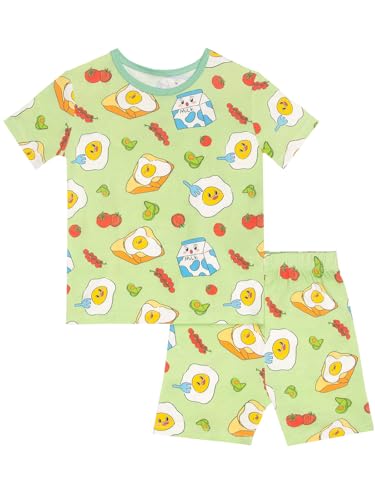
GUISBY short-sleeve child sets
GUISBY offers a short-sleeve set in 6–7 Years; check the bottom length before choosing it for coverage.
Check AmazonView design & fit detailsAs an Amazon Associate I earn from qualifying purchases. Purchases take place on Amazon.
Search past the age words in the headline
PATPAT’s Dino bamboo-viscose three-piece listing names a 12Y selection despite toddler wording in its title. Jimonda also lists bamboo-rayon options in 8Y and 12Y, and GUISBY lists a short-sleeve rayon-from-bamboo set in 6–7 Years. Use the actual selected size and its chart to narrow the search.
Use the child's current clothes as questions, not as a universal size conversion
Begin with the manufacturer's requested body measurements. A size from a familiar daytime brand can be useful background, but it should not replace the sleepwear chart. Different product categories may use different cuts, and the presence of stretch does not make numerical labels consistent across brands.
Notice what is currently becoming unsuitable. Are sleeves ending too high? Is the leg length no longer appropriate? Does the child dislike the neckline even though the rest appears to fit? Those observations help identify which measurement or design to investigate. They are more specific than asking whether all bamboo pajamas run small.
Keep following snug-fit labels as children grow. CPSC’s tight-fitting standards include sizes 7 through 14; the snug-fit explanation applies beyond toddler shopping.
Bring the child into the comparison before the order
Offer a manageable shortlist whose size and garment category are already suitable. Then ask about the differences the child will actually experience: short or long sleeves, the feel of a neckline, a preferred print, and whether the pieces are easy to identify. This keeps the choice meaningful without making the child responsible for verifying product claims.
If the child has a known sensitivity to a particular seam, label or finish, investigate that construction directly. A bamboo-source fabric description does not prove the absence of the disliked feature or establish a medical benefit. The label and finishing details are the useful questions to ask.
Compare the full outfit, including what a pack actually contains
Before comparing pack prices, identify every included garment. PATPAT’s three-piece Dino listing and Jimonda’s four-piece BlueCyan listing do not establish their complete contents from the titles alone. Confirm sleeve and bottom lengths, then count how many of the pieces your child would use.
Check the legs and cuffs after a growth spurt
With the waistband in its intended position, look at where the trousers end while the child stands and sits. Ask the maker for an inseam if the chart leaves length unclear. A hem riding up and a cuff feeling restrictive are different fit problems; increasing the whole size may add unsuitable room elsewhere. Continue to follow the garment’s snug-fit directions.
For two-piece sleepwear, consider whether the child can manage the waistband and top opening during the bedtime routine. That access can matter more than an extra piece in a multipack. Recheck the size chart at the next purchase instead of assuming that a familiar print uses the same proportions throughout the older-child range.
Questions about this choice
Why does a PATPAT listing say toddler when the selected size is 12Y?
Marketplace titles sometimes include several age terms. The Dino listing names a 12Y option; check that selected size and its chart rather than relying on the toddler wording elsewhere in the headline.
Does a four-piece children’s pajama pack always mean two complete outfits?
Not from a piece count alone. Confirm the actual included garments and their sizes. The Jimonda BlueCyan 7–8 Years title identifies four pieces and long sleeves, but the complete contents should be checked before describing how many coordinated outfits the pack provides.
Can an older child who dislikes babyish prints simply wear adult bamboo pajamas?
Do not use print preference as a substitute for appropriate children’s sleepwear fit and labeling. Adult styles can have different proportions and intended fit. Search the documented older-child ranges for a suitable design, and keep any adult clothing decision separate from this children’s sleepwear comparison.
Final Verdict
Start with a real size option, then let the child compare prints, neckline and sleeves. A larger bundle is useful only when its contents suit those preferences.
As an Amazon Associate I earn from qualifying purchases. Purchases take place on Amazon.