Bamboo feedstock alone does not establish that a pajama is environmentally superior. Look for specific claims about the actual fibers, production or certification, then check their scope and supporting evidence. Organic, biodegradable, chemical-free and sustainable are not interchangeable terms. Prefer a well-described garment you will use over broad green promises that leave the important details unanswered.
A green leaf on a hangtag can convey a complete environmental story in a second. Proving that story takes more work. When you shop for bamboo pajamas, the useful question is not whether the plant sounds appealing. It is which claims about the finished garment are actually supported, and whether those claims help you make the purchase you intended.
As an Amazon Associate I earn from qualifying purchases. Purchases take place on Amazon.
Three options to explore
Composition is only one part of evaluating an environmental claim. These listings give some fiber information, but none of the picks has earned an environmental ranking or verified footprint advantage from us. Budget and premium reflect relative prices observed during research, which can change; check Amazon for current prices. How we choose products.

Ekouaer top and pants lounge set
Ekouaer describes the top-and-pants set as viscose from bamboo; ask for the full blend and any supporting certification details.
Check AmazonView design & fit details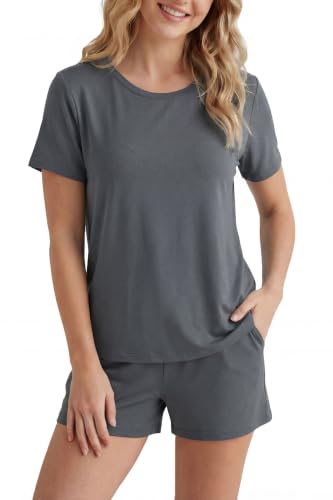
LUBOT bamboo-viscose and cotton set
LUBOT names cotton and bamboo viscose without a complete percentage breakdown or sustainability certification in the title.
Check AmazonView design & fit details
Cozy Earth women’s long-sleeve pajama sets
Cozy Earth specifies 95% bamboo-derived viscose, which does not by itself establish organic status or a lower environmental impact.
Check AmazonView design & fit detailsAs an Amazon Associate I earn from qualifying purchases. Purchases take place on Amazon.
Separate the story into claims that can be checked
Start by identifying what the seller is saying. A claim about where cellulose came from is different from a claim about manufacturing. A statement about tested substances is different from one about organic cultivation. A disposal claim is different again. Grouping all of these under an eco-friendly badge makes comparison feel easy while concealing the distinctions you need.
The FTC’s Green Guides summary cautions against broad, unqualified environmental-benefit language. For a shopper, a specific claim with a clear boundary is more useful than an assurance that an entire product is green. Ask which attribute is being described and what evidence links it to the exact item.
The plant source is the beginning of the description
Read the complete fiber composition first. A bamboo-derived viscose pajama has a manufactured fiber description as well as an advertised source. A blend also contains whatever additional fibers are stated on its label. Preserve all of that information instead of allowing the main plant name to stand in for the whole garment.
Lenzing describes distinct viscose, modal and lyocell production technologies. Its description illustrates why a favorable statement about one identified process cannot simply be transferred to an unknown garment. The presence of bamboo in a product name does not identify a specific factory, solvent-recovery system or branded fiber.
Certification is useful when you know what it certifies
OEKO-TEX STANDARD 100 concerns testing for harmful substances against its criteria. The organization’s Label Check allows a label number to be checked. That is a specific verification route; it is not a blanket certificate for every environmental or health claim a shopper might associate with the garment.
Begin with the exact label name rather than a general statement that a brand is certified. Different programs address different things. Look for a number or other information that makes verification possible, and confirm that the scope is relevant to the product. A broad brand description does not necessarily establish the status of every item or variation.
Do not translate a substances-testing label into proof of organic farming, guaranteed cooling, an allergy-free experience or treatment for a skin condition. Those are different claims. A certification can be valuable while remaining narrower than the overall impression created by an advertisement. Keeping its scope intact makes the information more trustworthy rather than less useful.
Organic
Ask what is claimed to be organic and under which identified certification or standard. Is the statement about a feedstock, a different fiber in the blend, or the finished textile? Those possibilities should not be collapsed into one assumption. If a product title uses organic without explaining its scope, the word alone does not answer your question.
Biodegradable
Ask whether the statement concerns a fiber sample, the whole fabric or the complete pajama, and under what conditions. A set contains more than its main fiber: other listed ingredients, sewing thread, closures and decoration can all be part of the object being purchased. Do not interpret an ingredient-level description as permission to compost an entire garment at home.
Chemical-free
This phrase does not give a useful account of material composition or textile processing. A more meaningful product description identifies what was tested or excluded and the basis for that statement. Avoid treating chemical-free wording as proof of safety for every person or a comprehensive environmental assessment. Ask for the narrower fact that the claim is intended to communicate.
Sustainable
Look for the specific attribute behind the word. A statement about sourcing, a factory process or packaging may be relevant, but it does not automatically evaluate the entire product lifecycle. You can take a documented improvement into account without turning it into a claim that the product has no tradeoffs.
Your use of the garment belongs in the decision
Consider whether the pajamas solve a real need in your wardrobe. A set that duplicates several unworn pieces deserves a different purchase decision from one replacing an outfit that no longer fits. This is a practical way to think about buying without pretending to calculate a precise environmental impact that the available information cannot support.
Usable lifespan is part of a purchase you can control
A documented production claim can inform the purchase, but the pajamas still need to be something you will wear and maintain. A well-fitting top may remain useful after its matching trousers need replacing. A local seam repair may keep a favorite adult pair in use. Our repair-versus-replace checks separate those cases from widespread thinning or failed fit.
Choose a care routine your household can actually complete. That is a practical ownership decision, not a calculation of environmental savings. Without comparable lifecycle data, neither wearing a set longer nor buying a named fiber justifies a precise claim about liters of water or kilograms of carbon saved.
Questions about this choice
Does a certificate shown elsewhere on a brand website cover the pajamas I selected?
It may or may not. Check the certificate’s scope and whether the brand connects it to the exact product. A brand can offer many items, revisions or fabric combinations. If certification is central to your decision, seek enough information to verify that specific claim instead of extending it across the entire catalog.
Can I compost a bamboo-viscose pajama because its main fiber is described as biodegradable?
Do not infer home compostability for a whole garment from an ingredient-level claim. The conditions and scope matter, as do other fibers and components. Look for guidance that actually covers the complete product and the proposed disposal method. A plant-source description alone does not provide that instruction.
Is a product with fewer environmental claims necessarily less responsible?
No. The number of claims is not a reliable ranking method. Compare the substance and verifiability of the information provided. A modest statement tied to an actual attribute can be more informative than extensive promotional language. Missing claims also do not establish a positive result; they simply leave that issue unresolved.
Final Verdict
A specific, traceable claim is more useful than a green badge. Verify the product and scope before treating a certificate or manufacturing story as a reason to buy.
As an Amazon Associate I earn from qualifying purchases. Purchases take place on Amazon.