A comfortable adult pajama waistband needs a suitable circumference, a resting position you like, and enough adjustment for your use. Elastic width alone does not predict comfort; tension and the casing also matter. A drawcord can adjust fit but cannot fix inadequate room through the seat. Evaluate the band while seated, and check whether pockets change how the trousers hang.
A waistband can feel comfortable standing and fold into a ridge as soon as you sit. Its tension, casing and resting position all contribute. Loosening a drawcord helps only when the cord is the part creating pressure.
As an Amazon Associate I earn from qualifying purchases. Purchases take place on Amazon.
Three options to explore
Decide where you want the waistband to sit before comparing sizes. Elastic-waist and high-waisted descriptions tell you about construction, but not how much pressure a band will apply. How we choose products.

LUBOT long-sleeve elastic-waist pants set
LUBOT includes an elastic waistband in this long-sleeve pants set.
Check AmazonView design & fit details
Ekouaer men’s pocket sleep shorts
Ekouaer's men's shorts pair an elastic waist with pockets; check the band measurement as well as the hip size.
Check AmazonView design & fit details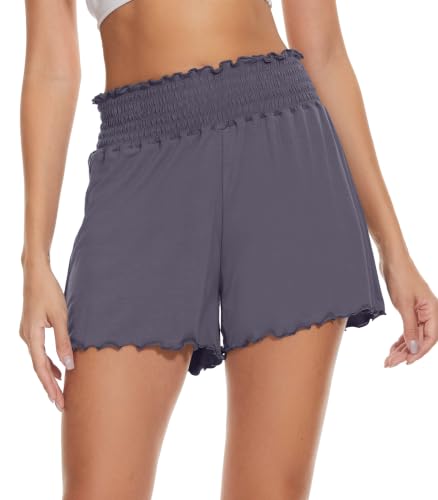
WiWi high-waisted sleep shorts
WiWi's high-waisted shorts are an option when you prefer the band to sit higher.
Check AmazonView design & fit detailsAs an Amazon Associate I earn from qualifying purchases. Purchases take place on Amazon.
Understand what is holding the trousers up
An elastic waistband uses tension to retain the garment around the body. A drawcord provides an adjustable tie, while many trousers combine both. The combination does not necessarily let you make the band completely slack: the elastic still has its own relaxed circumference and resistance. If that underlying band feels too tight, loosening the cord may not change the main source of pressure.
A fabric casing covers the elastic and may change the surface you feel against the skin. Exposed elastic presents a different edge and finish. A broad-looking waistband in a photograph could contain narrower elastic inside, so appearance is not a reliable construction specification. Look for close-up images or an actual description of the band before assigning it features such as fully enclosed, stitched-down, or flat elastic.
Some constructions allow the elastic to twist within a channel; others secure it at points or along its length. These details are not consistently visible in listing titles. If twisting is a problem you have had before, make that a specific question about the candidate garment. “Is the elastic secured inside the waistband?” is more informative than assuming that a wider band automatically prevents movement inside the casing.
What an elastic-waist description leaves unanswered
An “elastic waistband” description, such as the one on LUBOT’s bamboo-viscose long-sleeve set, does not tell you the relaxed circumference or firmness. Ask for those details if pressure at the waist is your main concern. A visible tie may supplement elastic rather than replace it.
Width and tension answer different questions
A broad band can spread contact across a larger area, but it can still feel firm if its circumference or elastic resistance is unsuitable for the wearer. A narrow band may feel acceptable when it has appropriate tension and a finish you like. There is no universal width that makes every adult comfortable. Consider the whole construction rather than ranking wide and narrow bands in isolation.
Edges matter as much as the center. A seam allowance, stiff label, drawcord opening, or folded casing edge may be the point you notice. When examining a garment, locate that specific contact point rather than concluding that all elastic is uncomfortable. A different seam placement or finish may solve the issue without changing the entire trouser silhouette.
A very wide band can also fold on a torso shape or at a sitting position that does not suit it. Folding is not automatically evidence of a defective garment; the band and body may simply interact poorly in that position. Note whether it happens at the front, sides, or all around. If it repeatedly creates a thicker ridge you dislike, a narrower band or different rise may be more useful than another similar wide-band design.
Find the resting position before judging the size
Pajama trousers can be designed to rest at different points around the waist and hips. Your comfortable circumference at one position may differ from the circumference at another. Measure where you intend the band to sit and compare that with the garment’s rise and chart. A size chosen only from the narrowest waist measurement may not describe a lower-sitting trouser accurately.
Let the waistband settle naturally during try-on. If you must pull it much higher to keep the hem off the floor, leg length may be distorting your judgment of the waist. If you push it lower to relieve pressure, the back coverage and crotch position may change. Solve those length and rise issues separately so the band is evaluated in a position that makes sense for the whole trouser.
Sitting is the important second view. Notice how the front band meets your torso, whether the back is pulled downward, and whether the seat remains comfortable. A waistband that stays in place while standing may still need a different rise or more seat room for sitting. Pulling harder on a drawcord can keep trousers up without addressing the underlying fit mismatch.
Decide whether you want a drawcord for sleep, lounging, or both
A drawcord can be useful when you want the waistband more secure for walking around the house and less cinched while relaxing. Its benefit depends on how much adjustment is actually possible and where the tie sits. An internal cord and an external tie create different contact and appearance. Check whether the knot would rest against the body or remain outside under a top.
The cord’s position also matters when lying on your stomach or side. A bulky knot centered at the front may be more noticeable in one position than another. That is a practical preference rather than a medical claim. If you dislike ties during sleep, an elastic-only design may be a better format, provided its own tension suits you.
Account for pocket weight before blaming the elastic
An item in one pocket can pull the trousers down on that side. Check the band with empty pockets first, then with the light item you intend to carry while awake. If it works only when cinched tightly, keeping the item elsewhere may be easier. See the pocket guide for opening and depth checks.
Repairing or replacing elastic
If a new waistband is uncomfortable, decide whether the garment is suitable before laundering or making changes. Cutting elastic, removing a cord, or opening a casing can change both function and any retailer return eligibility. Those decisions deserve more care than assuming the elastic will simply relax to the perfect fit. A properly selected band should not depend on an uncertain break-in transformation.
When an older pair needs repair, an alterations professional can assess whether its elastic is replaceable and whether the casing has enough access. Some elastic is sewn into the garment in ways that make replacement more involved. Replacing it with a softer or longer piece changes how the trousers stay up, so the repair should consider the seat and rise as well as the waist circumference.
Questions about this choice
Will loosening the drawstring always loosen a pajama waistband?
Only if the drawstring is the limiting part. In a combined construction, elastic retains its own tension even with the cord untied. If the relaxed elastic is already uncomfortable, a different size or waistband design may be necessary.
Why does one side of my pajama waistband drop when I use the pockets?
An item in one pocket can pull unevenly on the garment. Consider the pocket position, the item you carry, and whether the trousers already fit properly when empty. Tightening the entire waist may counter the pull but can introduce unwanted pressure elsewhere.
Can a tailor replace pajama waistband elastic?
Sometimes. Feasibility depends on whether the elastic is enclosed, stitched through, or integrated with other seams and openings. Ask about the actual garment rather than assuming all waistbands are accessible. A repair should preserve a suitable balance between holding the trousers up and seated comfort.
Final Verdict
Choose the band in the position where you will wear it, especially while seated. A drawcord should refine a good fit, not hold a poorly proportioned trouser in place.
As an Amazon Associate I earn from qualifying purchases. Purchases take place on Amazon.