A bamboo-cotton blend should identify both cotton and the actual bamboo-derived fiber, such as viscose, along with the documented composition. Percentages tell you the stated fiber proportions, not a comfort score or guaranteed performance. Check whether the label applies to the whole garment or a specified section, and do not assume an unlisted remainder is cotton or elastane.
The most consequential number in a material description is sometimes the one that is missing. A pajama title may state a bamboo-derived viscose percentage but leave the balance unexplained. Before deciding that it is the cotton blend you wanted, stop there: the unknown remainder is not a blank space that a shopper should fill with the most plausible ingredient.
As an Amazon Associate I earn from qualifying purchases. Purchases take place on Amazon.
Three options to explore
Cotton and bamboo-derived viscose appear together in these blends. Check the full fiber percentages before choosing; the listings below do not give a complete breakdown. How we choose products.
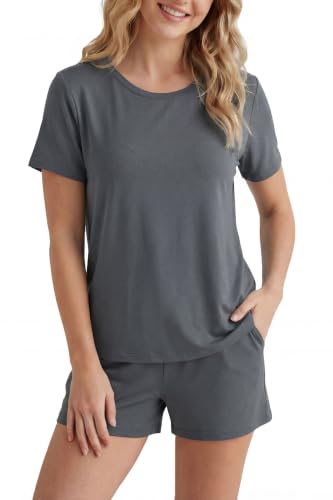
LUBOT bamboo-viscose and cotton set
LUBOT pairs short sleeves with a two-piece cotton-and-viscose outfit.
Check AmazonView design & fit details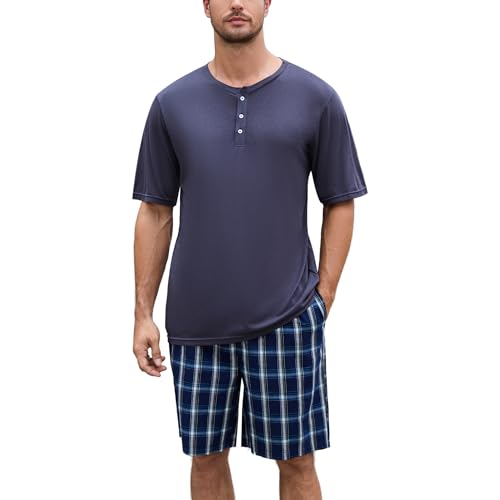
Vulcanodon short-sleeve bamboo-viscose and cotton sets
Vulcanodon offers a men's short-sleeve set made with cotton and bamboo-pulp viscose.
Check AmazonView design & fit details
EPOPLAR men’s bamboo-viscose and cotton pants
EPOPLAR sells the cotton-and-viscose bottoms separately if you already have a top.
Check AmazonView design & fit detailsAs an Amazon Associate I earn from qualifying purchases. Purchases take place on Amazon.
Read every ingredient before judging the ratio
A blend is a combination, so the complete composition is the starting point. Look for cotton by name and for the actual manufactured fiber associated with bamboo. A description containing bamboo-derived viscose and spandex does not become a cotton blend because it is soft or sold beside cotton pajamas. The material words, not the shopping category, establish the distinction.
The FTC’s textile labeling guidance addresses fiber names and proportions, including situations involving separate sections. For an ordinary buying decision, retain the complete stated composition and note what part of the product it describes. A prominent material phrase is less informative than the actual full label.
Percentages answer a narrower question than shoppers expect
A fiber percentage describes a stated proportion. It does not say that the garment delivers the same proportion of two imagined comfort experiences. A half-and-half blend, used here only as an arithmetic example rather than a product claim, is not a formula for being halfway between two pajama sets you have worn. Construction and finishing still shape the finished fabric.
Nor does a larger cotton share automatically establish that a garment can follow the care routine of your existing cotton sleepwear. The finished garment has its own instructions. The blend can identify what is present without supplying a wash temperature, dryer permission or shrinkage rate. Keep those questions separate instead of allowing a ratio to become a care label.
What if the label leaves part of the blend unexplained?
A headline stating “95% viscose from bamboo” does not tell you the remaining fiber. Look for the complete composition before deciding whether cotton is present. “Cotton-like feel” describes a sensation, not cotton content. Our fiber-label guide explains the naming.
If you want cotton, it must appear in the stated composition. If you need to exclude polyester or elastane, read the full label and any relevant component information. For an ordinary comparison without an ingredient restriction, use bamboo viscose versus cotton alongside the garment’s fit and care details.
What the description answers
| What the description establishes | What remains unanswered |
|---|---|
| Cotton plus bamboo-derived viscose, with complete stated proportions | Fabric weight, cut, opacity and care method |
| A percentage of bamboo-derived viscose only | The remaining fibers unless separately identified |
| A complete composition listing only bamboo-viscose and a stretch fiber | No cotton is declared; check another product if cotton is required |
| A cotton-like feel description | Actual cotton content |
Do not use composition as a substitute for product evidence
A higher bamboo-derived share does not automatically prove stronger cooling, a softer hand or a more responsible manufacturing process. A cotton-containing blend does not automatically establish organic sourcing. Those statements concern different attributes and need their own support. The full label can improve transparency without settling every question about the product.
Cotton-rich blend or viscose with elastane?
If you specifically want cotton in your pajamas, a viscose-and-elastane composition does not meet that requirement. A cotton-rich blend has a larger cotton share, but that share does not tell you its stretch, thickness or feel compared with a viscose knit you already own. If both complete compositions are acceptable, compare the cut and care instructions rather than treating a higher percentage as a quality score.
Questions about this choice
If a label gives only the main fiber percentage, can I assume the rest is a stretch fiber?
No. The remainder needs its own identification. A familiar blend in another product is not evidence about this garment. If the missing ingredient could change your decision, seek the full composition rather than treating a likely guess as an established material fact.
Does a cotton-rich blend always use cotton-pajama care settings?
No universal care conversion follows from a ratio. Use the instructions for the finished garment, which may include additional fibers, trims or construction details. A composition label helps identify materials; it does not replace the separate information about suitable washing, drying or ironing.
Should the percentages determine which of two acceptable blends I buy?
Only to the extent that the proportions matter to your stated preferences. If both full compositions meet your needs, compare garment features and measurements. A slightly different ratio is not a measured comfort or quality score, so it should not automatically outrank a more useful outfit.
Final Verdict
Look for cotton in the complete composition. Once the ingredients meet your needs, let fit and care decide between otherwise acceptable blends.
As an Amazon Associate I earn from qualifying purchases. Purchases take place on Amazon.